Privacy terms often sound complicated – Data Controller, Processor, Data Subject… But what if we explained them through cupcakes? 🍰
Here’s a simple comic-style story that ties all the definitions together.
Meet Anya – The Data Subject
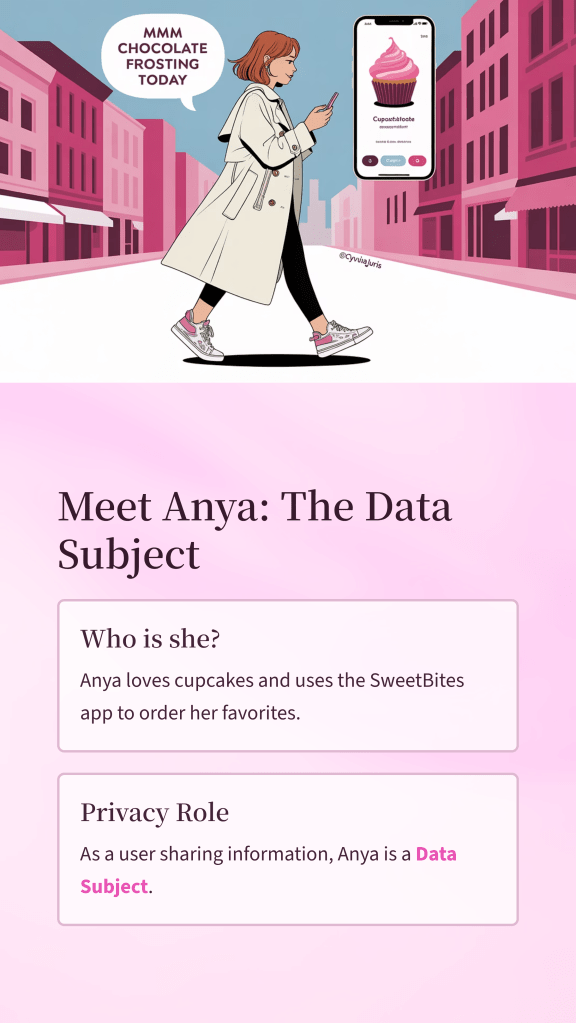
Anya loves cupcakes. When she uses the SweetBites app, she enters her name, address, and phone number. That makes her the Data Subject – the individual whose personal information is collected.
Personal Data
The details Anya provides (name, phone, address, card info) are her Personal Data – anything that can identify her directly or indirectly.
SweetBites as the Data Controller
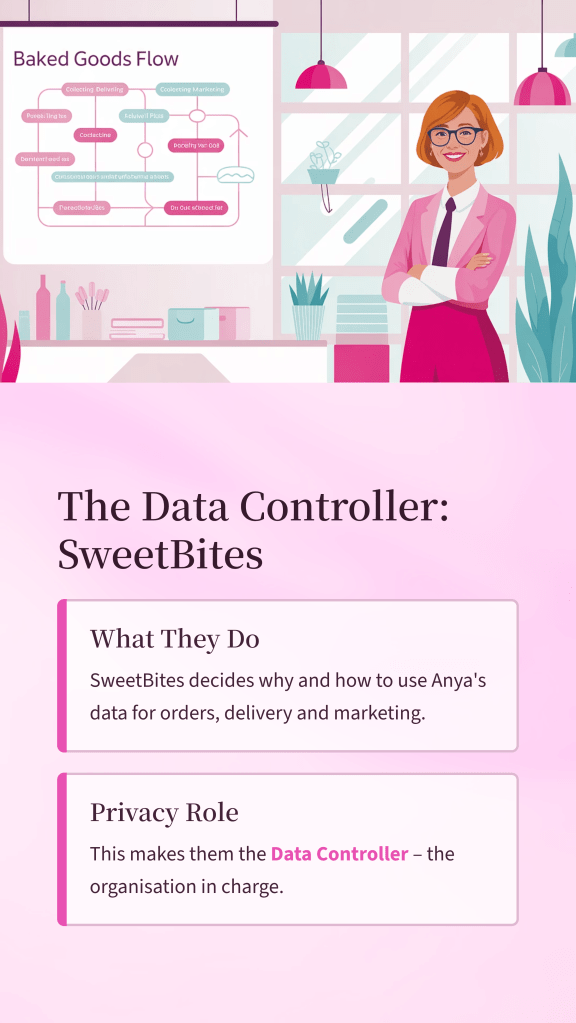
The bakery decides why and how to use Anya’s details – for delivery, billing, or marketing. That decision-making role makes SweetBites the Data Controller.
The Helpers – Data Processors
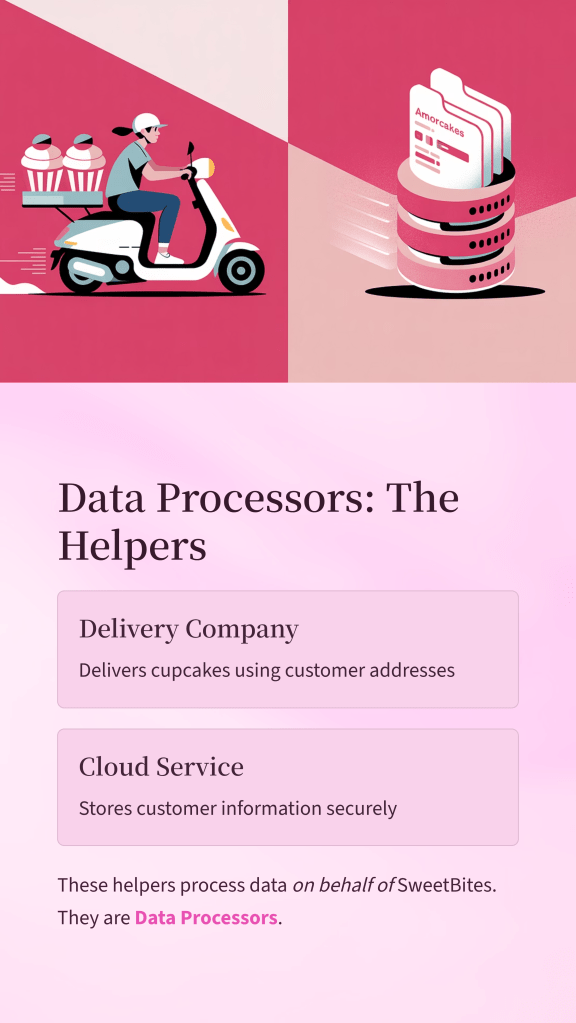
SweetBites doesn’t work alone. The delivery company and cloud server process Anya’s data on the bakery’s instructions. They are Data Processors.
Privacy by Design
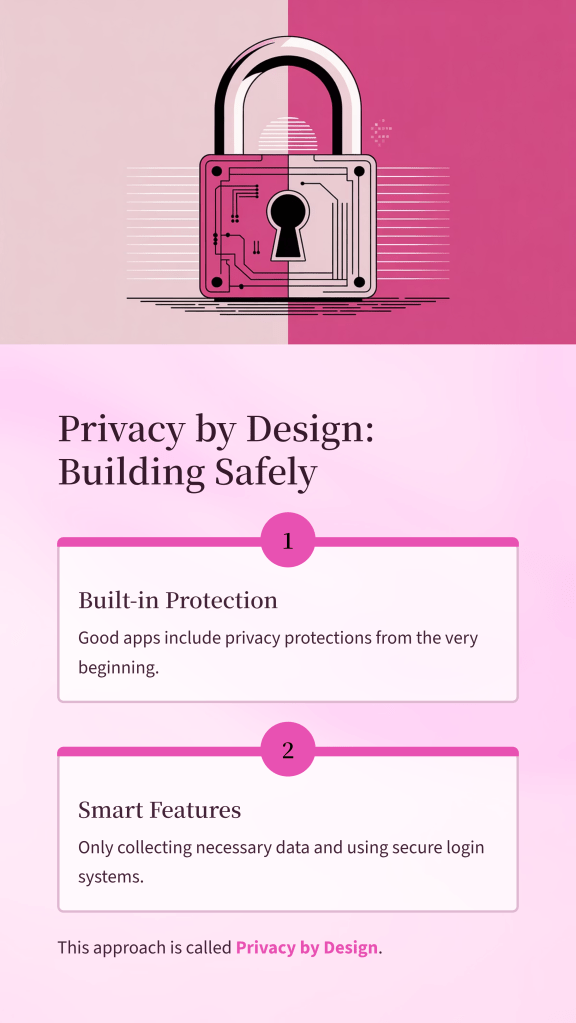
Good apps think about privacy from the start. The SweetBites app was built with secure login and minimum data collection – an example of Privacy by Design.
When Things Go Wrong – Data Breach
But one day, a hacker breaks into the system and steals customer info. That’s a Data Breach – when personal data is lost, leaked, or stolen.
The Resolution
SweetBites apologizes, reports the breach, and upgrades security. Customers, like Anya, can now enjoy cupcakes with confidence.
Conclusion:
Privacy definitions may sound abstract, but in reality, they’re part of our everyday interactions – from cupcake apps to global tech platform.
So next time you order something online, remember:
- You are the Data Subject.
- Your details are Personal Data.
- The company is the Data Controller.
- Their partners are Data Processors.
- And your privacy deserves protection, by design, not by accident.
 CyviaJuris